Showing posts with label recycling. Show all posts

Thursday, September 20, 2018

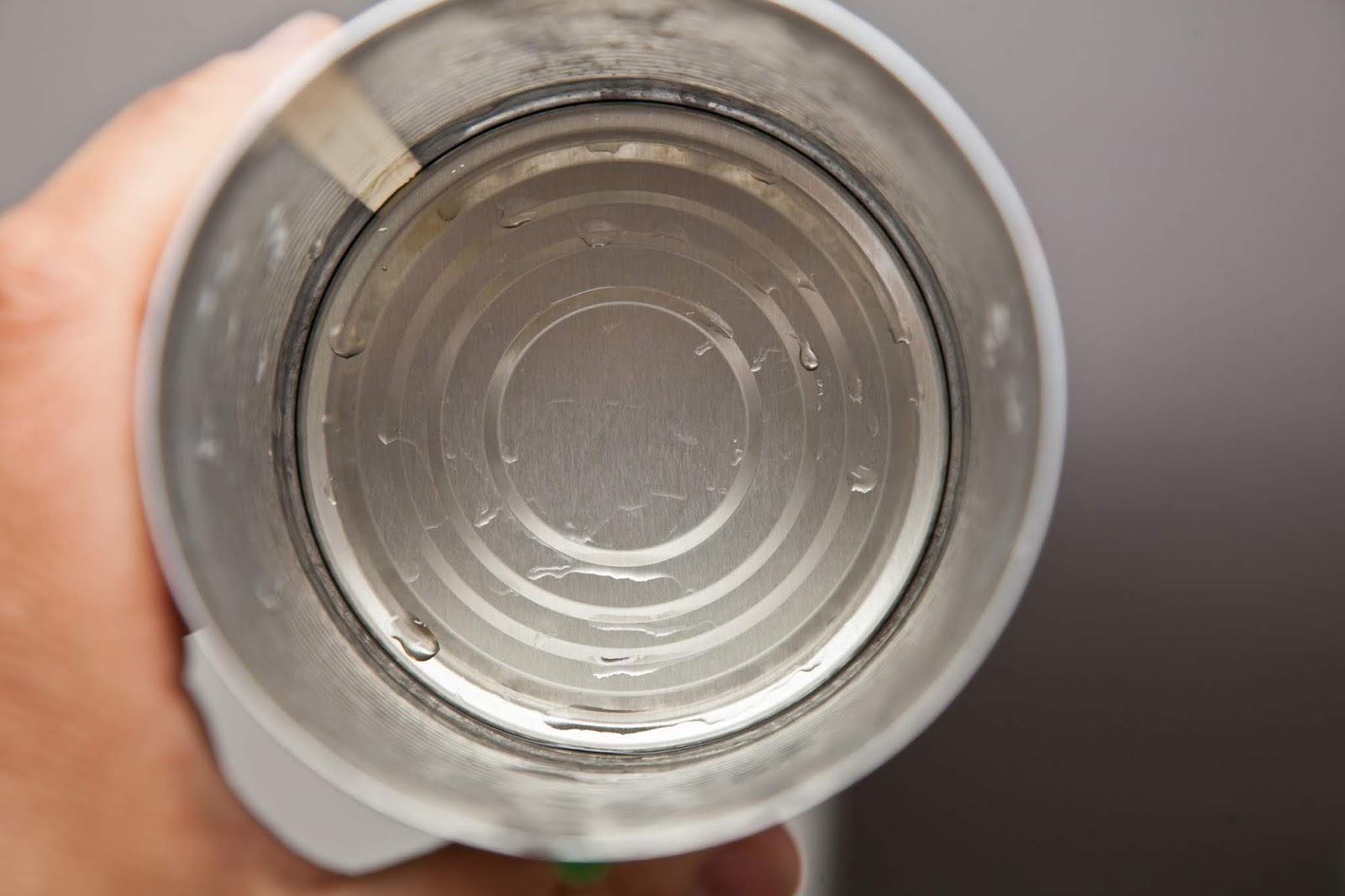
How Empty is Empty?

Recycling should be a process in which clean, empty recyclable materials are sorted and baled then sent to the world market for reuse. Contaminants, however, prevent this process from not only going smoothly, but sometimes prevent it from going on at all.

Some commodities, such as metal, glass and sometimes even plastic, go through processes where small amounts of debris or contaminants don’t adversely affect the final product.

Small amounts of food or liquid left in soda bottles, vegetable cans or pickle jars will most likely not be at a contamination level that would render the whole load of recycling unusable.

Tuesday, September 18, 2018

Is My Beer Bottle Recyclable With a Lime In It?

“People have been making glass for more than 4000 years, and it’s one of the few materials in the world that is perpetually recyclable. The same glass can be broken down and reused over and over again — theoretically, a million times over.

Since recycled glass melts at a lower temperature than new materials, it takes less energy to reuse. In fact, much of the glass in your favorite bottle of beer has possibly been in tens, if not hundreds of bottles of beer before.”

What Happens If I Don’t Rinse Out My Recycling?

Most recycling centers request that you to rinse out your recyclables before you put them into your bin for recycling. But what happens if you don’t?

If there are a few drops of soda in a bottle, a few small corn kernels in a can or some stray pieces of cereal in the bottom of a box, it shouldn’t be a problem to get these materials recycled.

If, on the other hand, there’s enough peanut butter or mayonnaise on the inside of a jar to make another sandwich, recycling centers may turn away the whole truck load due to contamination.

Monday, July 9, 2018

Food Waste Recycling

Food waste recycling is the process of diverting food that would otherwise be sent to landfills to either compost facilities or anaerobic digesters.

“Anaerobic digestion occurs naturally, in the absence of oxygen, as bacteria breaks down organic materials and produces biogas, which can then be used as an energy source.”

Monday, June 25, 2018

Is My Shredded Paper Recycled?

Shredded paper is recyclable in any recycling process that accepts paper in their recycling bins.

There are, however, a few things we need to keep in mind as we put shredded paper into our recycling.

All paper consists of fibers and the longer the fiber, the more valuable the paper is during the recycling process. Since paper is generally recycled over and over, the fibers become shorter and may need to be "downcycled".

Tuesday, June 19, 2018

Recycling Facts 2018

1. "Only about one-tenth of all solid waste in the United States gets recycled.

2. Landfills are among the biggest contributors to soil pollution – roughly 80% of the items buried in landfills could be recycled.

3. Although 75% of America’s waste is recyclable, we only recycle around 30% of it.

Sunday, April 15, 2018

How Many Times Can it Be Recycled?

Although many products are recyclable, some have a higher number of times it can be recycled than others. Here’s a guide to the most commonly recycled commodities and how many times they can be recycled.

According to Alcoa, the world's third largest producer of aluminum, the aluminum can is infinitely recyclable. That means it can be used, recycled, and turned back into a new can endlessly. In fact, it can be recycled and back on the store shelf as a new beverage can in less than 60 days.

Thursday, March 15, 2018

Are Plastic Bread Clips Recyclable?

Plastic bag closures, the plastic hook-like piece commonly used to hold bread products closed, are widely used across the world in countries like the United States, Canada, Ireland, Australia and Japan. “They are also commonly called bread tags, bread tabs, bread ties, bread clips or bread-bag clips”.

“According to the Kwik Lok website, the idea for the bread clip came to Floyd Paxton, Kwik Lok’s founder, during a flight in 1952….while he was on the plane, Paxton was eating a package of complimentary nuts, and he realized he didn’t have a way to close them if he wanted to save some for later. As a solution, he took out a pen knife and hand-carved the first bread clip out of a credit card”.

Monday, February 19, 2018

The Environmental Impact of Convenience

For some, recycling is a big priority. Even a certain degree of inconvenience is accepted and endured to make sure they can recycle as much as possible.

For others, recycling isn’t a priority at all and everything goes into the trash no matter what it is.

There is a third category, however, and as hard as it is to admit it, it’s where I fall. It’s the category of people who will recycle only if it’s easy and convenient. Any deviation from those and the priority of recycling falls to a mere unimportance.

Sunday, January 21, 2018

Are Spiral Notebooks Recyclable?

Spiral notebooks, regardless of whether they have a plastic or a metal spiral binding, are recyclable. The preferred way to recycle them, however, is to remove the spiral binding prior to putting the notebook itself into your recycling bin.

Recycling centers may not have the sophisticated mechanisms necessary to remove the spiral binding as the notebook is traveling through the sorting process, but the bindings will eventually be separated from the notebook. This may happen after it gets baled, sold and has begun the

Tuesday, November 7, 2017

Are Sandwich Bags Recyclable?

Sandwich bags, along with a multitude of other types of plastic bags such as grocery bags, cereal bags that don’t tear like paper, bread bags, dry cleaning bags and other food storage bags, are categorized as “film” or “plastic film”.

Film is usually either Plastic #2 or #4 made of polyethylene, the same plastic that makes milk jugs and margarine tubs are made from. Film, in itself, is recyclable, but the recycling center must have the means to provide such a service.

Monday, November 6, 2017

Can I Recycle Wax Paper?

Wax Paper, or waxed paper, has many uses as an aid in the kitchen as a moisture resistant wrapping for food to keep it from getting soggy, among other uses. After using it, however, what should be done with it?

The process of recycling paper doesn’t allow for sticky, glue-like, greasy or waxy substances on the paper. “When paper products are recycled, they are mixed with water and turned into a slurry. Since we all know water and oil don’t mix, the issue is clear”.

Monday, October 23, 2017

The Psychology of Green

What’s in a color? More than you might think. Color isn’t just something we choose because it’s pretty or bright and attention getting. There is a whole psychology behind why we like or choose the colors that we do.

“Your surroundings may be influencing your emotions and state of mind? Do you ever notice that certain places especially irritate you? Or that certain places are especially relaxing and calming? Well, there’s a good chance that the colors in those spaces are playing a part.”

Wednesday, August 9, 2017

Non-Recyclable Plastic

If certain plastics aren’t recyclable, why do they have a triangle on the bottom with a number in it? A commonly asked question, for sure.

Let’s first start with the organization that brought us the solid triangle containing a number to begin with.

“ASTM International, founded as the American Society for Testing and Materials, is a nonprofit organization that develops and publishes approximately 12,000 technical standards, covering the procedures for testing and classification of materials of every sort.” This obviously includes plastics, or resin.

Sunday, July 23, 2017

Does Rain and Moisture Affect Recycling?


Many of us take our trash and recycling out the night before it will be picked up to ensure that  But if it’s raining, does the rain affect the quality of recycling or its ability to even be recycled?  Unfortunately, the answer for some commodities is “yes”.
we remember to take it out and so we get it out before the truck comes on our service day.

Rain on material like aluminum, metal, plastic, and glass doesn’t pose any type of problem.  Cardboard and paper are a very different story.

Friday, July 21, 2017

The Role of Magnets in the Recycling Process

“Paper and paperboard have always had high recycling rates for bulk newsprint, office paper, and old cardboard.  Metal, however, is the material with the second-highest MRF-related recycling rates at over one third.”
 
Machines in recycling facilities designed for the purpose of separating recyclables are made up of several components.  Among these are different types of magnets to sort and handle metallic materials.  The most popular and widely used are overbelt magnets, electromagnets and eddy current magnets.

Sunday, February 19, 2017

Can I Put Recyclables Inside Of Each Other In My Cart?

Newspapers, tea bag wrappers, cracker boxes, and office paper….can you put it all into a cereal box before you put it into your recycling cart? Absolutely. However, if you add an aluminum can or a water bottle into that mix, the answer will change. 

Although Single Stream recycling means that you are welcome to put all of your clean unsorted, unbagged recycling into the same container loose, stacking them or putting some inside of others is subject to some specific guidelines.

Monday, December 12, 2016

Is Ceramic Recyclable?

Although most things with the right process are recyclable, conventional means of modern recycling
aren’t able to handle specific products, even if they are common, everyday products. Ceramics is one of these products.

Ceramics are essentially made of clay, whereas glass’ main component is silica or sand. Although glass is a type of ceramic, these two product types have very different recycling processes.

Monday, November 7, 2016

Can I Recycle Vinyl Siding?

When most people think of recycling, products like aluminum, plastic, cardboard, and paper come to mind. Materials like vinyl begin to become more questionable as a recyclable item.

“Vinyl is not a natural substance but is a synthetic man-made material. It is a type of plastic that is made from ethylene (found in crude oil) and chlorine (found in regular salt). When processed, both the substances are combined to form Polyvinyl Chloride (PVC) resin, or as is commonly referred to - Vinyl.”


Sunday, October 23, 2016

What Constitutes a “Contaminant” in Recycling?

In terms of recycling, a contaminant is anything that is not conducive to the recycling process of a particular commodity.

When recycling glass, for example, an aluminum can mixed in with the glass is considered a contaminant. Although aluminum itself is a recyclable material, it contaminates the glass load by not being able to be recycled with the same process as glass, therefore fouling up the whole operation.